
Organisational Stability in an Age of Impatience
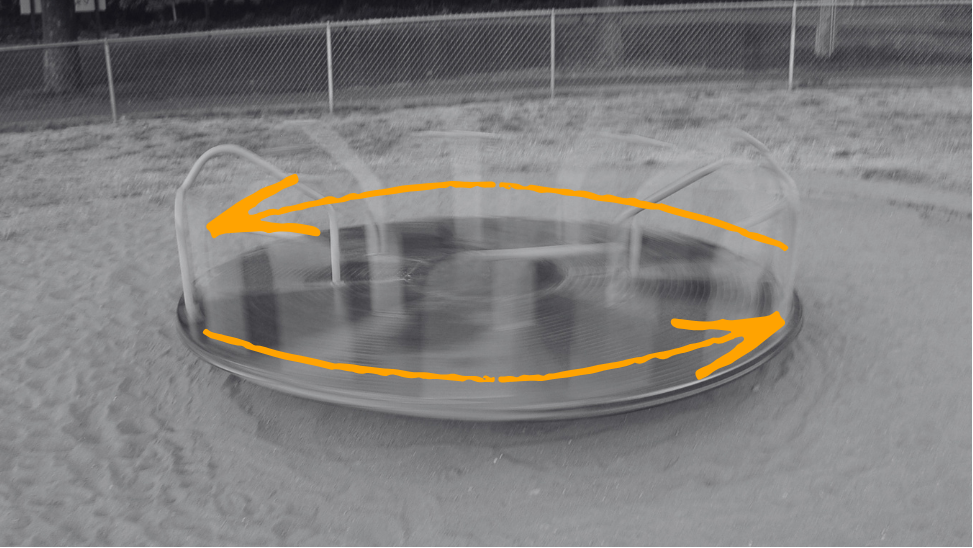
"If the leader stepped away tomorrow, would the system still choose the change on its own?"
In boardrooms across the world, the same pattern plays out with increasing frequency: a leader takes the helm with ambitious objectives, faces inevitable headwinds and exits in under two years. Boards and markets are increasingly unforgiving, and so organisations find themselves trapped in a perpetual state of reinvention that rewards performative action over the delivery of genuine breakthroughs.
This preference for the appearance of action over the hard work of sustained execution ignores the reality of what organisational change really takes. The price is paid in strategic confusion, organisational whiplash, eroded knowledge and a loss of trust that sets in when hard-working teams realise their initiatives may be abandoned before they bear fruit.
The evidence is not hard to find:
Asda has been without a permanent CEO since 2021. A run of interim and stand-in arrangements has coincided with the supermarket losing market share while competitors grew.
In 2025, Royal Mail's Emma Gilthorpe resigned just over a year into the role, in the wake of the company's takeover by EP Group, the latest of several leadership changes in recent years.
Thames Water has had four chief executives since 2016, with the most recent now saying the turnaround will take at least a decade.
This is not only a corporate phenomenon. Recently, UK politics has run on the same impatience. In his book, Politics on the Edge, Rory Stewart tells of the tendency for ministers to be moved around with such frequency that achieving anything productive becomes nearly impossible - cabinet positions change hands before occupants can master their brief, let alone implement meaningful reform.
In sport, football managers are hired and fired at increasing speed, rarely given more than a season to build a team and implement their vision before results judged too slow cost them the job.
The contrast with long-tenured, successful leaders is striking:
Satya Nadella has led Microsoft for over a decade, fundamentally reshaping its culture and business model, a shift that took years to show up in results.
Jensen Huang has been NVIDIA's CEO for over thirty years, having founded the company in 1993 and steered it through multiple technological revolutions.
Doug McMillon stepped down from Walmart in early 2026 after more than a decade in which he turned the retailer into a tech-driven business whose shares consistently outperformed the market.
These are not arguments for longevity as a virtue in itself, as plenty of long-serving leaders preside over stagnation and on the contrary, leaders can make meaningful change at pace to deliver results. The point is narrower and more useful: the kind of transformation organisations now say they want takes longer to embed than the average leadership tenure allows. When the clock keeps resetting, the work never reaches the stage where it becomes self-sustaining.
So, who pays the price when the cycle keeps turning?
Senior leaders pay first, they are asked to deliver breakthrough change immediately while hitting short-term targets, holding stakeholder confidence and navigating organisational politics. The tempting path is to avoid the painful decisions that will not pay off within a tenure that may be cut short.
The organisation pays next, slipping into perpetual transition. If direction changes with each new leader, a common vision is hard to sustain and people learn to wait out the current initiatives knowing patience will be rewarded with a different approach from the next. An immune response to change sets in, the organisation becoming skilled at appearing to implement new strategies while quietly preserving the status quo. The best people leave, wanting to build something that lasts, and institutional knowledge walks out with them. Trust disintegrates and the culture erodes with it.
For customers, the signs are rarely immediate, but the long-term impact is real. In retail, a changing climate drives attrition and weakens service. In water companies without consistent direction on priorities such as storm-overflow investment, the public notices nothing at first. Taps still run, bills look the same. Years later the cracks form, beaches close after heavy rain, rivers fail ecological standards, and households pay more to fix problems that could have been addressed earlier and more cheaply.
So, what makes change survive the leader who started it?
The instinct, faced with a predecessor's unfinished work, is to be clearer, more consistent and more disciplined than the leader before. That instinct is understandable, but it keeps the transformation living in the leader rather than the organisation, which means it leaves when they do. The more useful goal is to build resilience into the organisation itself, so the change holds whoever happens to be in charge.
In practice, that means deliberately building a few things into the organisation so they survive a handover:
Hold a few priorities steady and make them understood from the board to the frontline, so leaders inherit them rather than needing to reinvent them
Set in-year objectives that create real value now but point unmistakably at the longer ambition, so the wins keep compounding even as people and pressures change
Build KPIs that span both horizons, so performance reads as a trajectory rather than this year's number, and the measurement itself protects the slower, harder decisions
Invest in the layer below the top team until they own the logic of the change and can tell its story, so that logic lives in the organisation rather than the people at the top, and survives them
Design governance and routines that protect the work when attention drifts and pressure returns, so it keeps moving without the leader in the room
Pivot when real opportunity demands it, not just because the leadership changed, because refusing to move can be as costly as churning for its own sake
The simple test
There is a simple test, worth asking honestly. If the leader stepped away tomorrow, would the system still choose the change on its own? If yes, the organisation has built something durable. If no, it has built a dependency on one person, and that is the one thing guaranteed not to survive them.
Fixing that dependency, means changing the ‘system’. It is the harder work that comes after the launch and the strategy and is precisely where most transformations fail. At Egremont we work alongside organisations in exactly that space, side by side rather than for, embedding change deeply through the organisation to make breakthrough transformation that lasts.